Energy procurement is entering a new era.
As global infrastructure projects accelerate across renewables, transmission, energy storage, electrification, hydrogen, and industrial energy systems, procurement complexity is increasing rapidly.
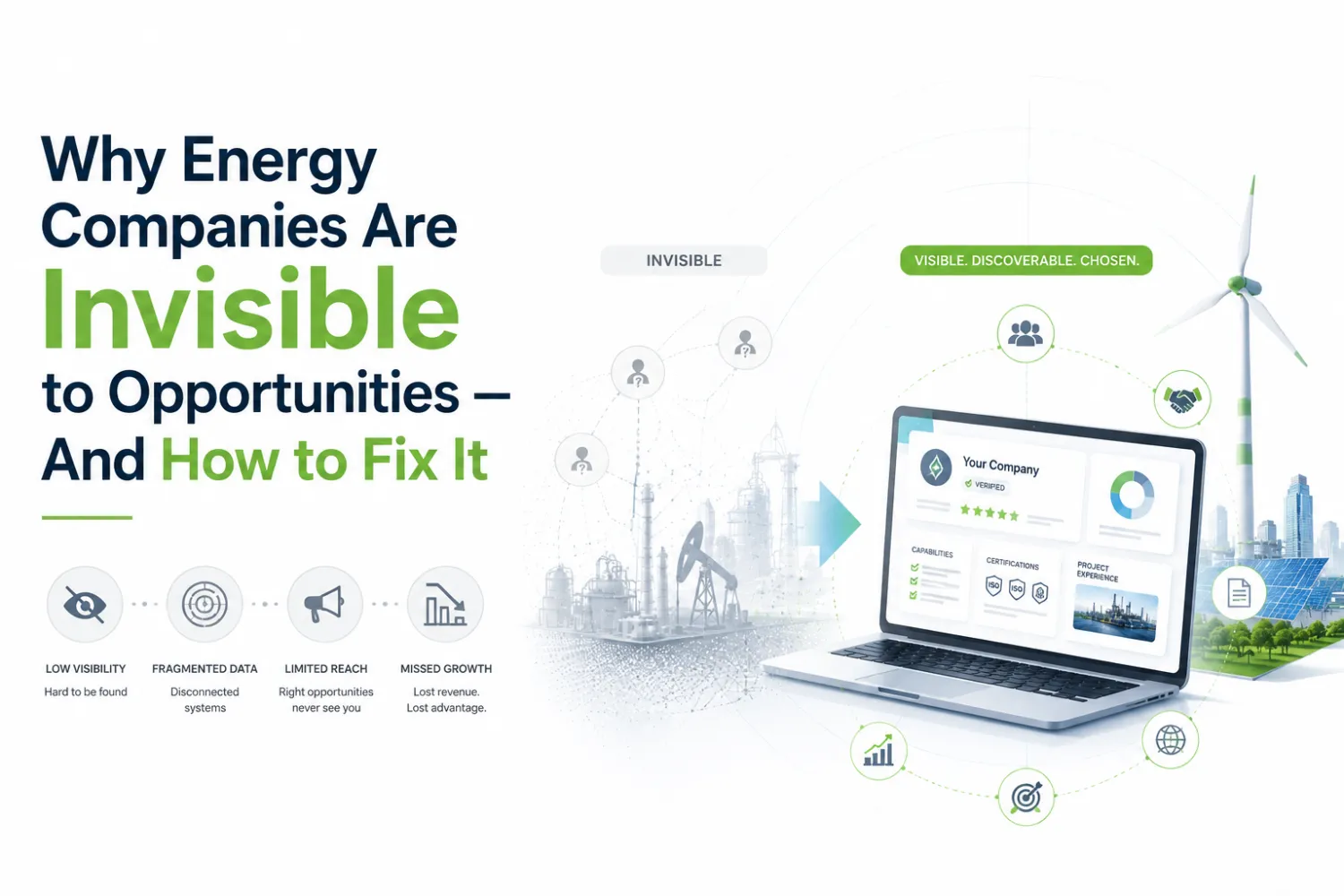
Yet despite major advances in technology, most energy procurement workflows still operate through fragmented and outdated systems.
Vendor discovery remains manual.
Tender intelligence remains scattered.
Supplier visibility remains inconsistent.
The result is slower execution, limited competition, and missed commercial opportunities across the global energy industry.
Energy Procurement Is Still Built Around Manual Processes
Across utilities, EPC contractors, infrastructure developers, OEMs, and industrial energy companies, procurement workflows still depend heavily on:
- Manual vendor discovery
- Static supplier lists
- Disconnected tender portals
- Email driven communication
- Relationship based sourcing
- Fragmented procurement visibility
While these systems may have worked historically, they are increasingly inefficient in a globalized and fast moving energy market.
The industry has digitized parts of procurement.
But it has not structured procurement intelligently.
The Hidden Cost of Fragmented Procurement
Procurement fragmentation creates operational inefficiencies that compound over time.
Missed Opportunities
Highly capable suppliers often remain undiscovered because visibility depends on geography, relationships, or manual sourcing processes.
Limited Supplier Competition
The same vendors are repeatedly invited into procurement cycles while broader qualified markets remain invisible.
Slower Procurement Cycles
Manual searching, qualification, comparison, and communication increase procurement timelines and operational friction.
Reduced Procurement Accuracy
Best fit suppliers are often overlooked because procurement systems are disconnected from real capability data and market intelligence.
In large scale infrastructure and energy projects, these inefficiencies become extremely expensive.
Why Traditional Procurement Systems Fail
The core issue is simple:
Most procurement systems are disconnected from structured industry intelligence.
Current procurement workflows rarely connect with:
- Real time market activity
- Verified supplier capabilities
- Cross border vendor visibility
- Infrastructure classifications
- Sector based capability mapping
- Industry wide commercial intelligence
As a result, procurement remains process driven instead of intelligence driven.
The system depends heavily on manual effort rather than structured market visibility.
What Modern Energy Procurement Should Look Like
Modern procurement should not rely on fragmented searching.
A modern energy procurement infrastructure should:
- Automatically surface relevant suppliers
- Match opportunities to verified capabilities
- Reduce manual procurement effort
- Improve procurement speed and precision
- Enable broader supplier participation
- Provide real time market visibility
- Support cross border supplier discovery
This requires more than digitization.
It requires structured intelligence.
Introducing Intelligent Procurement with AEGNS
AEGNS is building a different approach through GEOS — the Global Energy Operating System.
Instead of functioning as another isolated tender portal, GEOS connects:
- Opportunities
- Companies
- Capabilities
- Infrastructure sectors
- Commercial activity
within one unified industry framework.
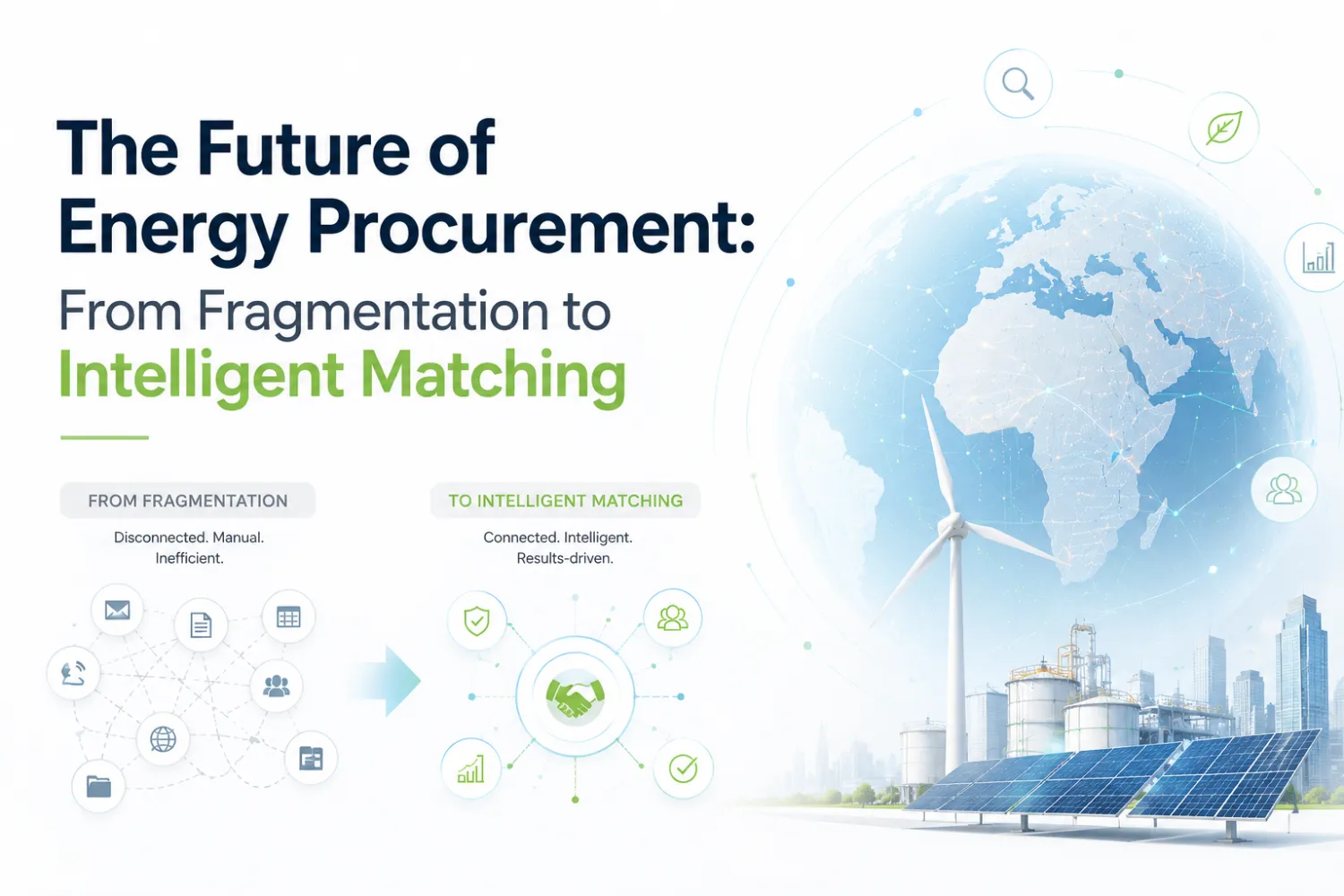
The objective is to transform procurement from fragmented workflows into structured market intelligence.
How Intelligent Matching Works
At the core of GEOS is a structured matching engine designed specifically for the energy industry.
The system maps opportunities and suppliers through a unified industry taxonomy.
- Energy Domains
The platform identifies the type of opportunity based on sectors such as:
- Renewable energy
- Transmission & distribution
- Energy storage
- Oil & gas
- Mobility and electrification
- Industrial infrastructure
- System Layers
GEOS identifies where the requirement sits within the infrastructure and commercial value chain.
- Company Roles
The platform understands the role companies play within the industry, including:
- OEMs
- EPC contractors
- Integrators
- Consultants
- Utilities
- Service providers
- Infrastructure developers
This creates more precise opportunity matching and stronger supplier visibility.
From Procurement Process to Procurement Intelligence
Traditional procurement systems operate through manual workflows.
GEOS shifts procurement into a structured intelligence system.
Instead of:
- Searching for suppliers manually
- Filtering disconnected vendor lists
- Evaluating limited procurement pools
GEOS enables:
- Intelligent supplier discovery
- Structured capability matching
- Broader supplier visibility
- Faster procurement workflows
- More accurate vendor alignment
The shift is not incremental.
It is structural.
Benefits for Buyers
Utilities, EPCs, project owners, and infrastructure developers gain:
- Faster supplier discovery
- Access to broader qualified vendor pools
- Reduced procurement friction
- Improved supplier alignment
- Better visibility into market capabilities
- Faster commercial decision making
Benefits for Suppliers
OEMs, contractors, integrators, and service providers gain:
- Increased opportunity visibility
- Access to relevant procurement activity
- Reduced dependence on legacy relationships
- Fairer market exposure
- Ability to compete based on real capability
Why This Matters Now
The global energy market is scaling rapidly.
Industries worldwide are experiencing:
- Renewable energy expansion
- Grid modernization
- Electrification growth
- Cross border infrastructure investment
- Supply chain transformation
- Industrial decarbonization
As infrastructure complexity increases, procurement systems must evolve with it.
Without change:
- Procurement bottlenecks increase
- Execution slows down
- Supplier visibility remains fragmented
- Infrastructure delivery becomes less efficient
The industry can no longer rely on disconnected procurement systems.
The Bigger Shift Toward an Intelligent Energy Economy
What AEGNS represents is larger than procurement software.
It is a transition toward a connected and intelligent energy economy.
An environment where:
- Companies become visible based on real capability
- Opportunities become structured and discoverable
- Matching becomes intelligent and automated
- Commercial execution becomes faster and more efficient
This is the foundation of a modern industry operating layer.
Final Thought
Procurement is no longer just an operational process.
It is becoming a strategic infrastructure advantage.
Companies that adopt intelligent procurement systems will move faster, discover better partners, reduce friction, and execute more effectively in a rapidly evolving global energy market.
AEGNS is building that future through GEOS — the Global Energy Operating System.