The global energy industry is expanding faster than ever.
From renewable energy and grid modernization to energy storage, electrification, hydrogen, oil & gas, and large scale infrastructure development, billions of dollars move through the market every year.
Yet despite its size and importance, one major problem continues to slow the industry down:
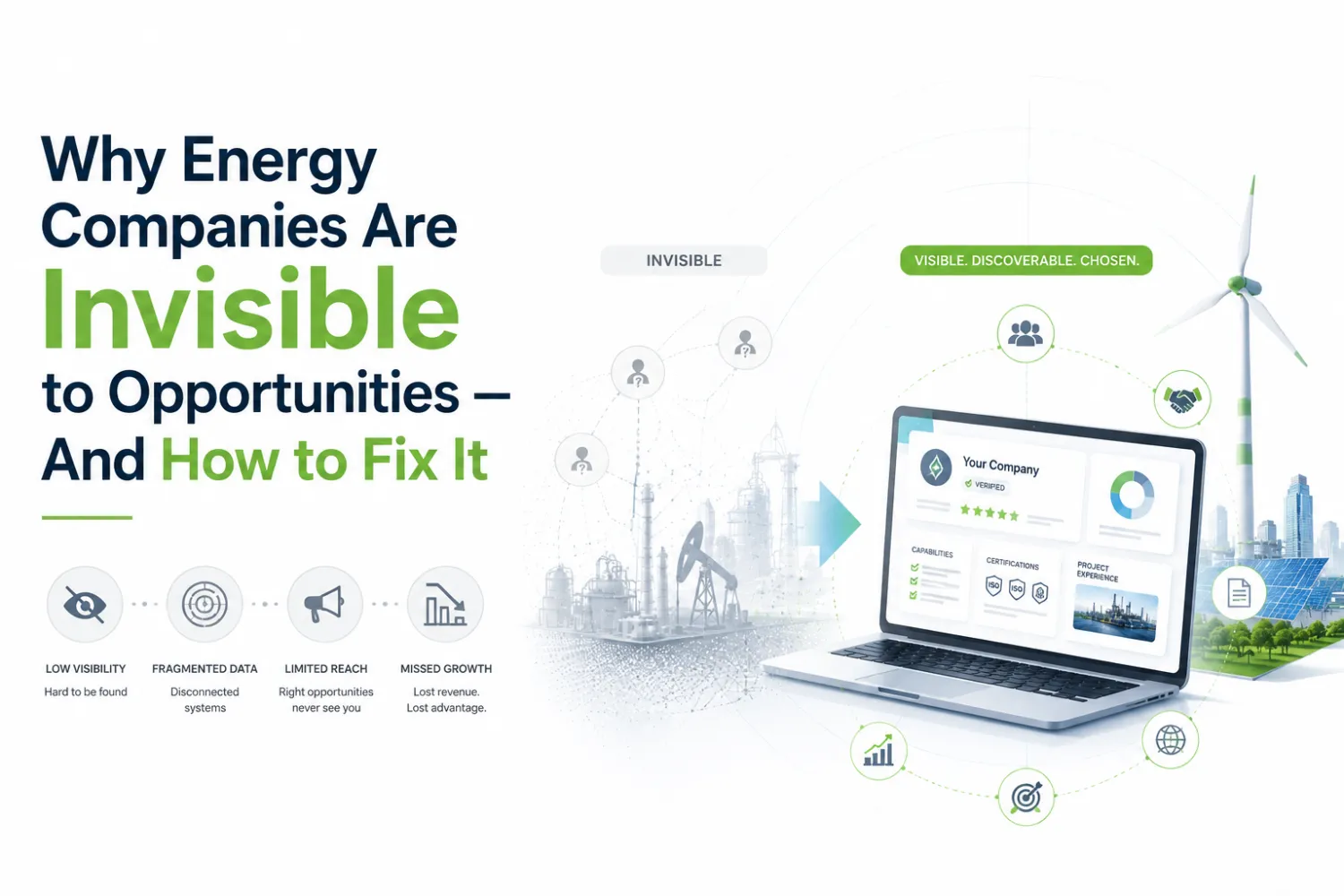
Companies remain invisible to the opportunities that matter.
This is not because of a lack of capability.
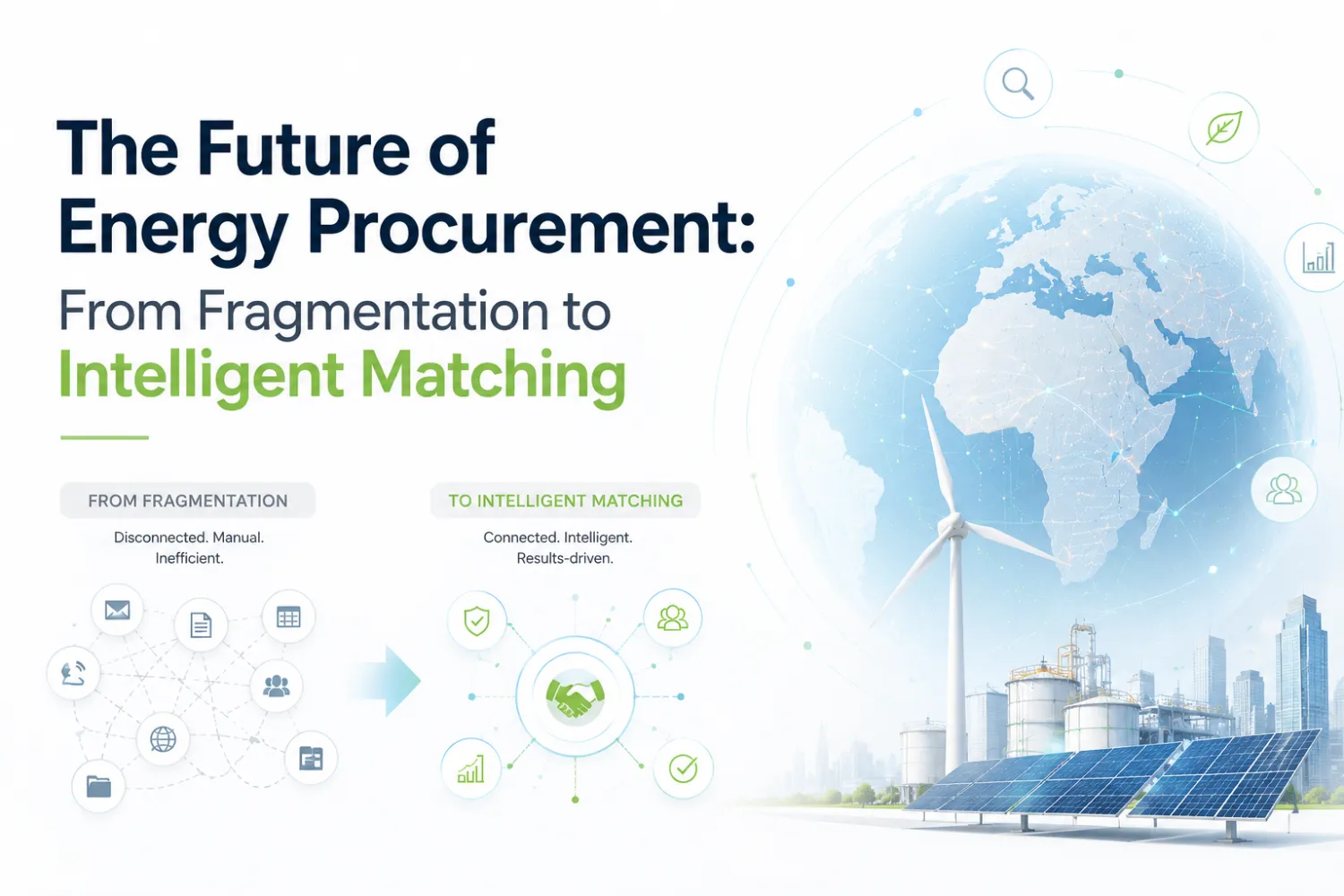
It is because the industry operates in disconnected systems.
The Energy Industry Is Fragmented
Today’s energy ecosystem relies on thousands of isolated platforms, regional procurement portals, databases, spreadsheets, marketplaces, and disconnected workflows.
Energy companies often search one platform for tenders, another for suppliers, another for market intelligence, and another for workforce visibility.
The result is operational fragmentation at a global scale.
Companies face challenges such as:
- Tender opportunities scattered across hundreds of procurement portals
- Vendor discovery that remains manual, inconsistent, and slow
- Limited visibility into relevant commercial activity
- Fragmented workforce and talent visibility
- Market intelligence systems that provide insight but not execution
- Difficulty positioning capabilities in front of the right buyers and partners
The industry has information.
What it lacks is structure.
The Real Problem: No Unified Industry Operating Layer
Most existing platforms solve only one small part of the energy value chain.
Some focus on procurement.
Others focus on products.
Others focus on analytics, engineering software, or workforce management.
But none connect the entire commercial ecosystem together.
There is currently no unified industry layer that answers:
- Who the companies are
- What they actually do
- Which sectors and regions they operate in
- Where opportunities exist
- How companies, suppliers, talent, and infrastructure connect
Without that structure:
- Discovery becomes inefficient
- Procurement slows down
- Visibility becomes inconsistent
- Commercial execution remains fragmented
This is the problem AEGNS is building to solve.
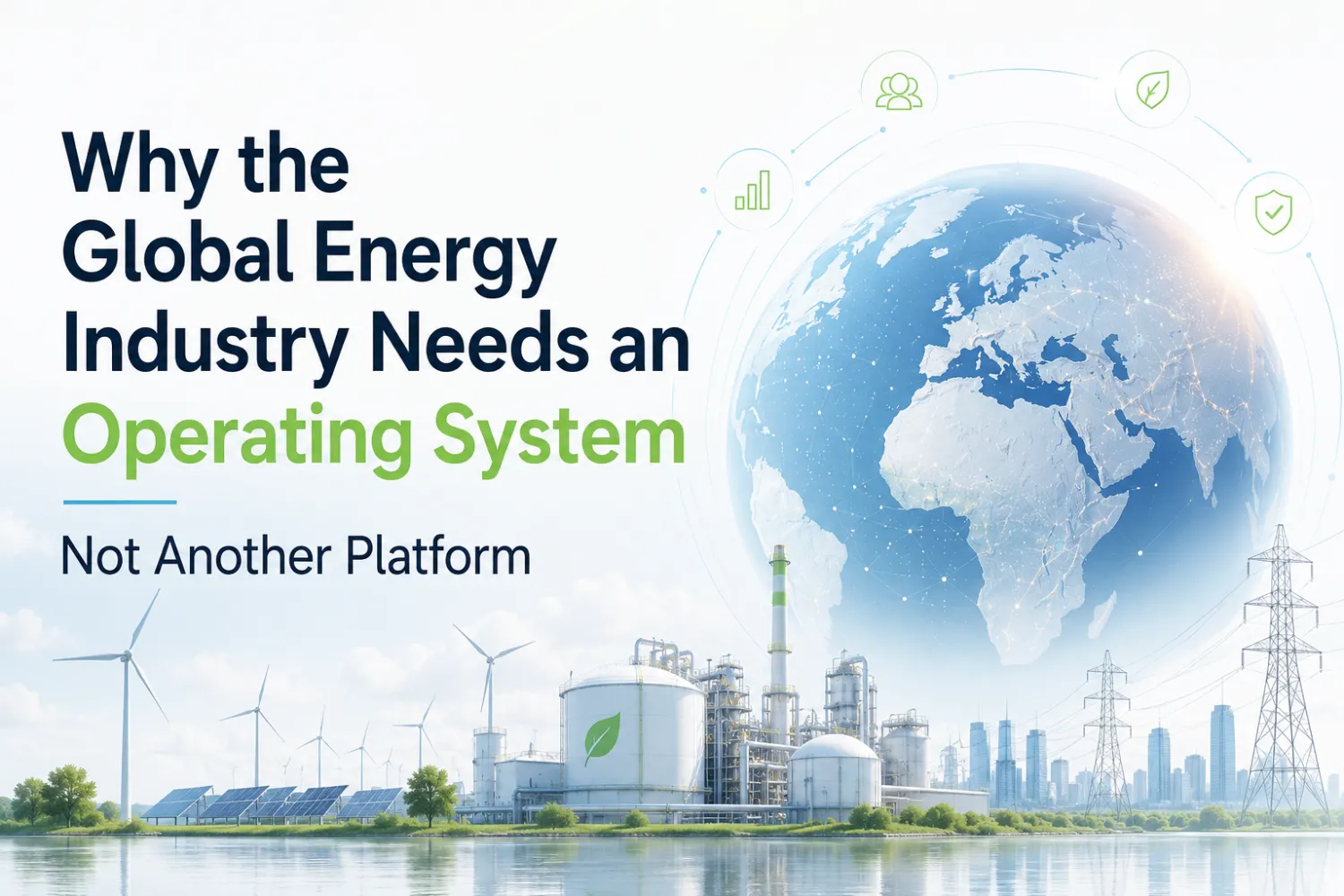
Introducing GEOS The Global Energy Operating System
AEGNS (All Energy Global Network Solutions) is building GEOS — the Global Energy Operating System.
Not another marketplace.
Not another tender portal.
Not another business directory.
GEOS is designed as a structured operating layer for the global energy industry.
The mission is simple:
Create one unified framework where energy companies, tenders, infrastructure, talent, and commercial activity connect intelligently.
What GEOS Brings Together
Company Graph
A structured map of global energy companies across:
- Energy domains
- Regions and countries
- Infrastructure sectors
- Commercial capabilities
- System layers
- Industry roles
This enables discoverability based on actual market relevance instead of generic keyword searches.
Tender Intelligence
GEOS aggregates energy related tender opportunities and maps them directly to relevant companies.
Instead of manually searching dozens of procurement websites, companies gain structured access to opportunities through intelligent visibility and matching.
Marketplace & Commercial Layer
Companies can showcase services, products, infrastructure capabilities, and commercial offerings within one connected ecosystem.
Talent Layer
GEOS connects verified professionals and workforce capabilities directly to industry demand.
Deal Rooms & Direct Engagement
Companies can engage directly with suppliers, contractors, partners, and buyers without unnecessary intermediaries.
Analytics & Market Visibility
GEOS provides structured visibility into:
- Market positioning
- Sector activity
- Opportunity flow
- Infrastructure trends
- Commercial engagement
From “Searching” to “Being Found”
Traditional platforms focus on search.
GEOS focuses on visibility.
That changes the entire commercial workflow.
The question is no longer:
“Where do I find opportunities?”
The better question becomes:
“Why is my company not visible where opportunities already exist?”
GEOS enables structured visibility through a unified industry framework that includes:
- Energy domains
- Infrastructure classifications
- Commercial roles
- System layers
- Regional positioning
This creates more accurate discovery, stronger matching, and better commercial alignment.
Why This Matters Now
The global energy transition is accelerating rapidly.
Industries worldwide are experiencing:
- Renewable energy expansion
- Grid modernization
- Electrification
- Energy storage growth
- Industrial decarbonization
- Cross border infrastructure investment
As complexity increases, fragmented systems become a larger operational problem.
Without a unified operating layer:
- Companies miss opportunities
- Procurement becomes slower
- High capability suppliers remain invisible
- Market discovery remains inefficient
The energy economy is becoming too interconnected to operate through disconnected systems.
The AEGNS Strategy: Build the Industry Map First
AEGNS is approaching the industry differently.
The focus is not immediate monetization.
The focus is building the industry map first.
This includes:
- Structured company mapping
- Global tender intelligence ingestion
- Verification and claim systems
- Taxonomy based classification
- Continuous infrastructure and market updates
As industry density grows, the value of the network compounds.
The objective is simple:
Make GEOS the place where the global energy industry becomes visible to itself.
What This Means for Energy Companies
GEOS is designed to help companies:
Increase Visibility
Be discovered based on real capabilities and market relevance.
Access Opportunities Faster
Reduce manual procurement searching and improve tender visibility.
Improve Competitive Positioning
Understand where the company sits within the broader market landscape.
Enable Direct Commercial Engagement
Connect directly with suppliers, contractors, buyers, and infrastructure participants.
Make Better Decisions
Use structured market intelligence instead of fragmented information sources.
A New Category Is Emerging
AEGNS is not simply competing with procurement portals, directories, or marketplaces.
It is building a new category:
The Global Energy Operating Layer
Just as operating systems unified computing environments, GEOS aims to unify commercial interaction across the energy industry.
The opportunity is not only data aggregation.
It is creating the infrastructure layer that enables visibility, discovery, coordination, and execution across the global energy economy.
The Road Ahead
AEGNS continues to expand:
- Global company coverage
- Verified industry profiles
- Tender intelligence infrastructure
- Commercial engagement systems
- Enterprise pilot programs
- Industry analytics capabilities
The long term goal is to build the operating system for the global energy market.
Final Thought
The energy industry does not need more disconnected platforms.
It needs visibility.
It needs structure.
It needs connection.
AEGNS is building exactly that.