The global energy industry is full of highly capable companies.
Across power generation, transmission & distribution, renewable energy, storage, infrastructure, mobility, and industrial energy systems, thousands of businesses deliver specialized expertise, products, engineering, and operational capabilities.
Yet many of these companies continue to miss major commercial opportunities.
Not because they lack capability.
Because they lack visibility.
This is one of the largest hidden inefficiencies in the global energy market.
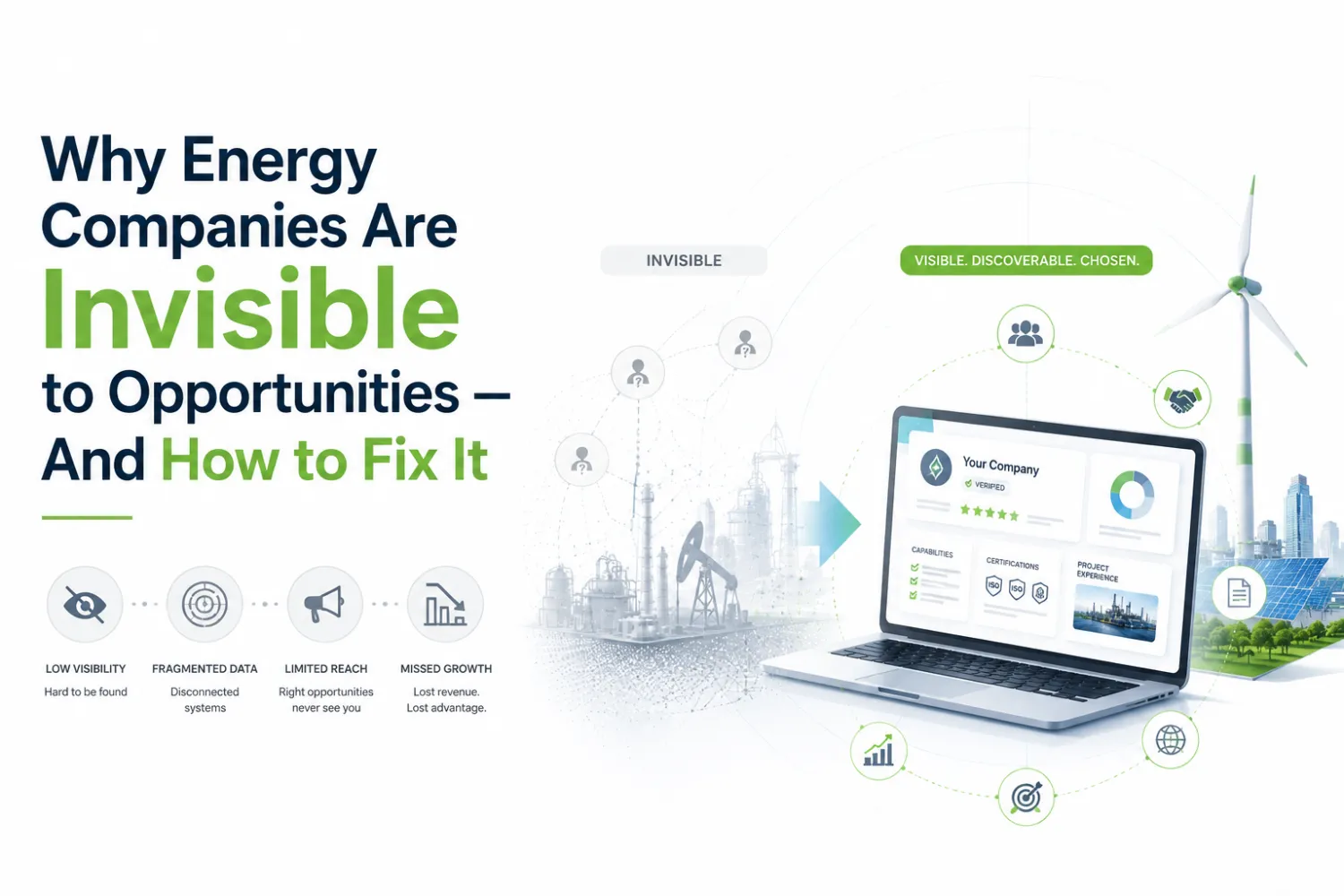
The Visibility Problem Nobody Talks About
Across the energy industry, opportunity discovery is still heavily fragmented.
Procurement teams, infrastructure developers, utilities, EPC contractors, and suppliers often rely on disconnected systems to identify potential partners and vendors.
In practice, commercial discovery still looks like this:
- Manual supplier searches
- Outdated vendor databases
- Disconnected procurement portals
- Spreadsheet based sourcing
- Relationship driven visibility
- Generic keyword searches
The result is a market where visibility is inconsistent and highly inefficient.
Often, the same companies receive repeated exposure while highly specialized and qualified firms remain undiscovered.
Capability Exists But Visibility Does Not
This is the core issue.
Opportunities exist.
Capabilities exist.
But there is no structured system connecting the two intelligently.
A company may:
- Have the exact technical expertise required
- Operate in the correct region
- Meet all procurement requirements
- Possess strong infrastructure experience
- Deliver specialized solutions
Yet still remain completely invisible at the point of opportunity.
This is the visibility gap.
And it affects the entire industry.
Why Traditional Platforms Fail to Solve the Problem
Most existing procurement and business discovery platforms are not designed to solve visibility at a structural level.
They typically rely on:
- Keyword based search
- Static company listings
- Generic categories
- Manual filtering workflows
- Limited supplier intelligence
This creates several major problems:
Poor Matching Accuracy
Keyword systems rarely understand real infrastructure capability or operational context.
High Manual Effort
Teams spend significant time filtering suppliers manually across fragmented systems.
Limited Supplier Exposure
Specialized companies struggle to appear outside their existing commercial networks.
Inconsistent Discovery
Visibility often depends more on brand familiarity than actual technical capability.
The system remains reactive instead of intelligent.
The Energy Industry Needs Structured Visibility
Fixing visibility requires more than adding more listings or more data.
The real solution is structure.
The energy industry needs a unified framework capable of understanding:
- What companies actually do
- Which sectors they operate in
- Where they operate globally
- How they fit into infrastructure systems
- Which opportunities are commercially relevant to them
This is the approach AEGNS is building through GEOS.
Introducing Structured Visibility Through GEOS
AEGNS is building GEOS — the Global Energy Operating System.
GEOS is designed to create structured visibility across the global energy industry.
Instead of relying on disconnected databases and keyword matching, GEOS organizes the industry through a unified intelligence framework.
- Energy Domains
Companies and opportunities are classified into structured sectors such as:
- Renewable energy
- Transmission & distribution
- Energy storage
- Mobility and electrification
- Oil & gas
- Operations & maintenance
- Industrial infrastructure
- System Layers
GEOS understands where companies fit within the infrastructure and operational value chain.
- Company Roles
The platform identifies what companies actually do within the market, including:
- OEMs
- EPC contractors
- Integrators
- Consultants
- Utilities
- Service providers
- Infrastructure developers
This creates significantly stronger visibility and discovery precision.
From Data to Intelligent Discovery
Once the industry is structured correctly, discovery changes completely.
Instead of relying on manual searching, GEOS enables:
- Accurate matching between companies and opportunities
- Relevant tender visibility based on real capabilities
- Reduced procurement friction
- Increased supplier exposure
- Better commercial alignment
- Faster discovery across regions and sectors
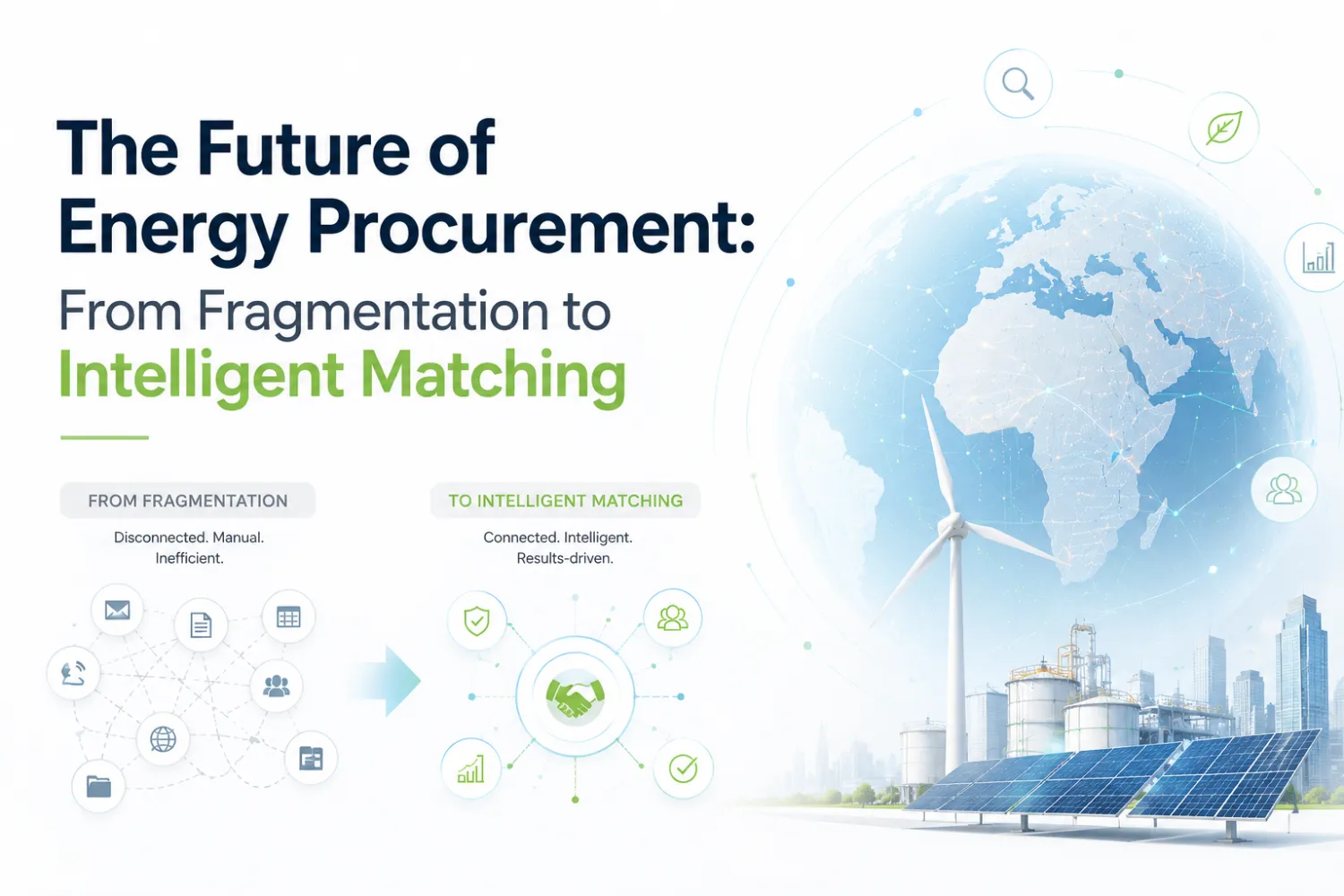
This transforms commercial discovery from:
Manual Search → Intelligent Visibility
The shift is structural, not incremental.
What This Means for Energy Companies
For suppliers, contractors, OEMs, consultants, and infrastructure firms, structured visibility changes how opportunities are accessed.
Companies can:
- Be surfaced automatically where relevant
- Gain visibility across multiple regions and sectors
- Compete based on capability rather than brand recognition alone
- Access opportunities previously hidden behind fragmented systems
- Improve market positioning through structured industry presence
Visibility becomes an operational advantage.
Why This Matters Now
The global energy market is becoming significantly more complex.
Industries worldwide are experiencing:
- Renewable energy expansion
- Grid modernization
- Cross border infrastructure investment
- Electrification growth
- Rapid technology specialization
- Increasing supplier competition
As complexity increases, fragmented discovery systems become a larger problem.
Without structured visibility:
- Procurement slows down
- Opportunity discovery becomes inefficient
- Qualified companies remain hidden
- Commercial execution becomes harder
The industry can no longer rely on disconnected visibility systems.
The Shift From Search to Presence
The energy market is moving away from search based discovery.
The future is presence based visibility.
Old model:
“Search for vendors when needed.”
New model:
“The right companies are already visible when opportunities emerge.”
This is the transformation GEOS is designed to enable.
Final Thought
In the modern energy industry, capability alone is no longer enough.
Visibility determines access.
Visibility determines discovery.
Visibility determines opportunity.
AEGNS is building the infrastructure where:
- Companies become visible
- Opportunities become structured
- Discovery becomes intelligent
- The global energy industry becomes connected through GEOS